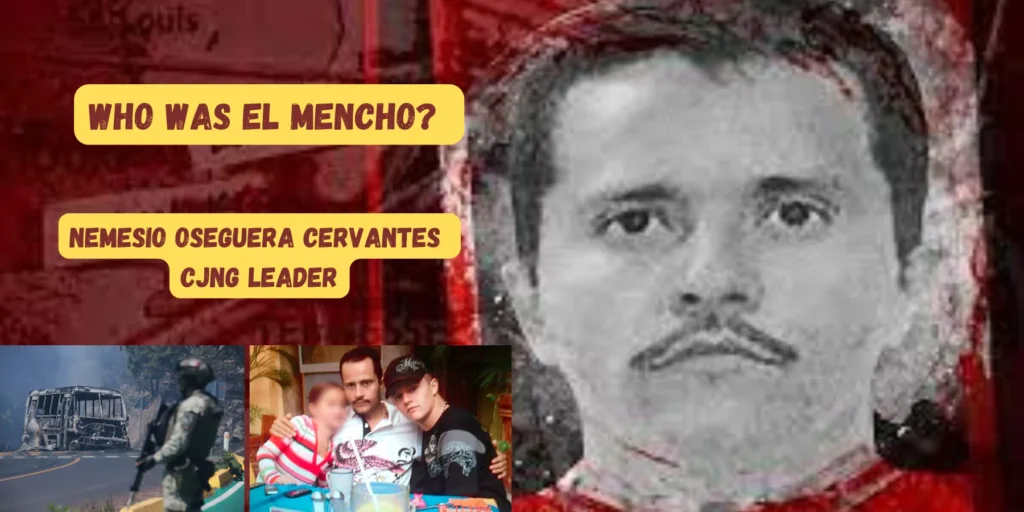
Nemesio Rubén Oseguera Cervantes, better known by his alias “El Mencho,” was one of the most notorious figures in the world of organized crime. As the founder and leader of the Cartel Jalisco Nueva Generación (CJNG), he transformed a regional drug trafficking group into a global powerhouse responsible for widespread violence, drug smuggling, and economic disruption. His death on February 22, 2026, during a Mexican military operation has sent shockwaves through Mexico and beyond, sparking immediate retaliatory violence and raising questions about the future of cartel dynamics. This comprehensive article explores his early life, ascent to power, criminal empire, impacts on Mexico and the United States, the circumstances of his death, and the current trends surrounding this pivotal event.
Early Life :- From Rural Poverty to U.S. Deportation
Born on July 17, 1966, in Aguililla, a small rural municipality in the western Mexican state of Michoacán, Nemesio Oseguera Cervantes grew up in extreme poverty. Raised in a family of agricultural workers, he labored in avocado fields from a young age and dropped out of primary school after the fifth grade to support his household. Aguililla, located in the Tierra Caliente region, was already a hotbed for drug cultivation, particularly marijuana and opium poppies, which influenced many locals to enter the narcotics trade.
In his late teens, Oseguera Cervantes illegally immigrated to the United States, settling in California where he had family ties. There, he became involved in small-scale drug dealing. His first confirmed brush with the law came in 1986 when he was arrested in San Francisco for possession of heroin. He served time in U.S. prisons and was deported back to Mexico in the early 1990s. Undeterred, he returned to the U.S. illegally and was arrested again in 1994 for methamphetamine distribution, leading to another prison stint and deportation in 1997.
Some reports suggest Oseguera Cervantes briefly served as a police officer in Mexico before fully entering the criminal world, but this remains unconfirmed and is often described as a rumor. (Disclaimer: This detail is based on unverified accounts and should be treated with caution; no official records substantiate it.) His experiences in the U.S. prison system likely forged connections with criminal networks that would prove instrumental in his later career.
Disclaimer: The information in this article is compiled from publicly available and verified sources as of February 25, 2026. While every effort has been made to ensure accuracy and rely solely on confirmed facts, we do not assume any responsibility for the completeness, timeliness, or potential errors in the information presented. Readers are encouraged to consult official government reports and multiple reputable news outlets for the latest updates.
Rise to Power :- From Milenio Cartel Enforcer to CJNG Founder
Upon his final deportation in 1997, Oseguera Cervantes returned to Michoacán and joined the Milenio Cartel, a mid-level organization involved in methamphetamine production and cocaine trafficking from South America. Starting as a low-level operator, he quickly rose through the ranks due to his ruthlessness and strategic acumen. By the early 2000s, he was a key enforcer, overseeing security and hit squads.
The turning point came in 2009-2010 when the Milenio Cartel fractured due to internal disputes and arrests of its leaders. Oseguera Cervantes, along with allies like Abigael González Valencia, seized the opportunity to form a new group: the Cartel Jalisco Nueva Generación (CJNG). Initially positioning itself as a “new generation” of traffickers fighting against rivals like Los Zetas, CJNG rapidly expanded through brutal tactics, including public executions and attacks on authorities.
Under El Mencho’s leadership, CJNG diversified beyond drugs. They pioneered large-scale fuel theft (known as “huachicoleo”) from Pemex pipelines, extortion rackets, and human smuggling. By 2015, CJNG had downed a military helicopter with a rocket-propelled grenade, killing nine soldiers, in a bold escalation that demonstrated their military-grade capabilities. Oseguera Cervantes evaded capture for years, reportedly using plastic surgery, body doubles, and a network of safe houses in remote areas.
Timeline of Key Events in El Mencho’s Rise
| Year | Event |
|---|---|
| 1966 | Born in Aguililla, Michoacán. |
| 1986 | First U.S. arrest for heroin possession. |
| 1997 | Final deportation from the U.S.; joins Milenio Cartel. |
| 2009-2010 | Co-founds CJNG after Milenio split. |
| 2015 | CJNG downs Mexican military helicopter; El Mencho declared public enemy No. 1. |
| 2018 | U.S. increases bounty to $10 million (later $15 million). |
Leadership and Criminal Activities of CJNG
As CJNG’s undisputed leader, El Mencho built an empire with thousands of members operating in at least 21 Mexican states and 36 countries worldwide. The cartel specialized in synthetic drugs like methamphetamine and fentanyl, sourcing precursors from China and smuggling finished products through Pacific ports like Manzanillo. CJNG’s violence was unprecedented: mass graves, beheadings, and attacks on civilians became hallmarks.
El Mencho’s family played key roles—his son, Rubén “El Menchito” Oseguera González, handled U.S. operations until his 2015 arrest and extradition, where he received a life sentence in 2025. His daughter, Jessica Johanna, was arrested in the U.S. in 2020 on money laundering charges. This familial structure helped maintain loyalty but also made CJNG vulnerable to targeted enforcement.
For Full Video Join Telegram Channel :- CelebCars.in
Impact on Mexico :- A Legacy of Violence and Economic Disruption
El Mencho’s CJNG profoundly destabilized Mexico. The cartel waged wars against rivals like the Sinaloa Cartel, leading to record homicide rates in states like Jalisco, Michoacán, and Guanajuato. Their control over ports and infrastructure fueled corruption, with bribes infiltrating police, military, and politicians. Fuel theft alone cost Mexico billions annually.
CJNG’s tactics included recruiting via social media, arming local cells with advanced weaponry, and terrorizing communities through extortion and forced displacement. In Guadalajara, a 2026 FIFA World Cup host city, the cartel’s presence raised security concerns, especially post-death violence that shut down the city. Experts warn his death could fragment CJNG, sparking internal power struggles and alliances with other groups, potentially increasing short-term violence.
Impact on the United States :- Fentanyl Crisis and Cross-Border Threats
CJNG under El Mencho became a primary driver of the U.S. opioid epidemic, flooding the market with fentanyl that killed tens of thousands annually. The DEA estimated CJNG’s presence in all 50 states, with hubs in cities like Los Angeles, Chicago, and Atlanta. U.S. authorities designated CJNG a foreign terrorist organization and offered a $15 million bounty on El Mencho.
His operations exacerbated border tensions, with potential migration surges from instability. The 2026 operation to kill him involved U.S. intelligence from a new FBI-ICE task force, signaling enhanced bilateral cooperation under Presidents Trump and Sheinbaum. While disrupting CJNG might reduce drug flows long-term, experts predict temporary chaos.
How He Was Killed :- The February 2026 Operation
On February 22, 2026, Mexican special forces, supported by U.S. intelligence, raided a safe house in Tapalpa, Jalisco, aiming to capture El Mencho. Tracked via a romantic partner’s “trusted man,” he was wounded in a firefight and died en route to Mexico City. The operation killed over 70 people, including 25 soldiers and cartel members.
Retaliation was swift: CJNG gunmen torched vehicles, blocked highways, and attacked infrastructure across 20 states, paralyzing cities like Guadalajara. Schools closed, flights canceled, and tourists were stranded. This violence, the most widespread since 2019’s Culiacán battle, highlighted CJNG’s reach.
Frequently Asked Questions (FAQs) About El Mencho
Q :- Who is El Mencho?
Ans :- El Mencho, whose real name is Nemesio Rubén Oseguera Cervantes, was the founder and leader of the Cartel Jalisco Nueva Generación (CJNG). He was one of Mexico’s most wanted criminals until his death in 2026.
Q :- What is El Mencho’s real name?
Ans :- His full name is Nemesio Rubén Oseguera Cervantes. He was born on July 17, 1966, in Aguililla, Michoacán, Mexico.
Q :- Where was El Mencho born?
Ans :- El Mencho was born in Aguililla, a rural town in Michoacán, Mexico, known for its involvement in drug cultivation like marijuana and opium poppies.
Q :- What was El Mencho’s early life like?
Ans :- Raised in poverty, El Mencho worked in avocado fields as a child and dropped out of school after fifth grade. He immigrated to the U.S. in his teens and got involved in drug dealing.
Q :- Did El Mencho serve in the police?
Ans :- Some unconfirmed reports suggest he briefly worked as a police officer in Mexico, but this is a rumor with no official records. (Disclaimer: Treat this as unverified.)
Q :- When was El Mencho deported from the U.S.?
Ans :- He was deported multiple times: first in the early 1990s after a heroin possession arrest in 1986, and finally in 1997 after a methamphetamine distribution conviction in 1994.
Q :- How did El Mencho rise to power?
Ans :- El Mencho started in the Milenio Cartel as an enforcer after his 1997 deportation. He co-founded CJNG in 2009-2010 following the Milenio Cartel’s fracture, expanding it through violence and diversification.
Q :- What is CJNG?
Ans :- CJNG stands for Cartel Jalisco Nueva Generación, a powerful Mexican drug cartel founded by El Mencho, known for drug trafficking, fuel theft, extortion, and extreme violence.
Q :- What drugs did El Mencho’s cartel traffic?
Ans :- CJNG specialized in methamphetamine, fentanyl, cocaine, and heroin, sourcing precursors from China and smuggling via Pacific ports like Manzanillo.
Q :- Did El Mencho have family involved in CJNG?
Ans :- Yes, his son Rubén “El Menchito” Oseguera González handled U.S. operations until arrested in 2015, and his daughter Jessica Johanna was arrested in 2020 for money laundering.
Q :- What was the bounty on El Mencho?
Ans :- The U.S. offered a $15 million reward for information leading to his capture, increased from $10 million in 2018.
Q :- How did CJNG impact Mexico?
Ans :- Under El Mencho, CJNG caused record homicides in states like Jalisco and Michoacán, fueled corruption, stole billions in fuel from Pemex, and displaced communities through extortion.
Q :- What was CJNG’s role in the U.S. opioid crisis?
Ans :- CJNG, led by El Mencho, was a major supplier of fentanyl to the U.S., contributing to tens of thousands of overdose deaths annually and operating in all 50 states.
Q :- Was CJNG designated as a terrorist organization?
Ans :- Yes, U.S. authorities labeled CJNG a foreign terrorist organization due to its violence and drug trafficking under El Mencho’s leadership.
Q :- When did El Mencho die?
Ans :- El Mencho died on February 22, 2026, during a Mexican military raid in Tapalpa, Jalisco.
Q :- How was El Mencho killed?
Ans :- He was wounded in a firefight during a raid by Mexican special forces, supported by U.S. intelligence, and died en route to Mexico City. The operation killed over 70 people.
Q :- What happened after El Mencho’s death?
Ans :- Immediate retaliation by CJNG included torching vehicles, blocking highways, and attacks across 20 states, causing shutdowns in cities like Guadalajara.
Q :- Is El Mencho really dead?
Ans :- As of February 25, 2026, federal sources confirm his death, though no body was publicly displayed.
Q :- Who might succeed El Mencho in CJNG?
Ans :- Potential successors include his brother-in-law or regional bosses, but this could lead to internal fragmentation and increased violence.
Q :- How has El Mencho’s death affected U.S.-Mexico relations?
Ans :- It has highlighted cooperation, with U.S. intelligence aiding the operation, but also raised tensions over fentanyl and potential migration surges.
Q :- What is the current status of CJNG after El Mencho?
Ans :- CJNG remains active but may face power struggles, potentially leading to alliances or wars with rivals like the Sinaloa Cartel.
Q :- Why is El Mencho trending in 2026?
Ans :- His death and the ensuing widespread violence have dominated headlines, especially amid U.S.-Mexico fentanyl tensions and the upcoming 2026 FIFA World Cup in Mexico.
Q :- Did El Mencho use plastic surgery to evade capture?
Ans :- Reports indicate he used plastic surgery, body doubles, and safe houses, but these are based on intelligence claims without full confirmation.
Q :- What was El Mencho’s net worth?
Ans :- Estimates vary widely, but as CJNG leader, his operations generated billions; no confirmed personal net worth exists due to the illicit nature.
Q :- How did El Mencho get his nickname?
Ans :- “El Mencho” is a diminutive of Nemesio, his first name, common in Mexican culture for nicknames.
Q :- What role did China play in El Mencho’s operations?
Ans :- CJNG sourced chemical precursors for meth and fentanyl from China, smuggling them into Mexico for production.
Q :- Has El Mencho’s family been arrested?
Ans :- Yes, multiple family members, including his son and daughter, have been arrested and extradited to the U.S. on drug-related charges.
Q :- What was the 2015 helicopter incident involving CJNG?
Ans :- CJNG, under El Mencho, downed a Mexican military helicopter with a rocket-propelled grenade, killing nine soldiers.
Q :- How does El Mencho compare to El Chapo?
Ans :- Both were major cartel leaders, but El Mencho’s CJNG was more violent and diversified than El Chapo’s Sinaloa Cartel, with a focus on synthetics.
Q :- What impact did El Mencho have on the 2026 World Cup?
Ans :- CJNG’s presence in host cities like Guadalajara raised security concerns, amplified by post-death violence.
Q :- Are there movies or documentaries about El Mencho?
Ans :- Several documentaries exist on CJNG, but no major biopic on El Mencho; coverage is in news specials from outlets like Vice and BBC.
Q :- What lessons can be learned from El Mencho’s story?
Ans :- It underscores the challenges of combating cartels through poverty, corruption, and international drug demand, emphasizing the need for bilateral efforts.
Q :- How can I stay updated on developments after El Mencho’s death?
Ans :- Follow reputable sources like DEA reports, Mexican government updates, and news from Reuters or AP for verified information.
Q :- Is there a book about El Mencho?
Ans :- Books like “El Jefe” by Alan Feuer cover similar cartel figures, but specific biographies on El Mencho are limited to journalistic accounts.
Q :- What was El Mencho’s height and appearance?
Ans :- He was described as about 5’7″ tall with a stocky build, but details vary due to evasion tactics; no recent confirmed photos exist.
Q :- Did El Mencho have ties to other cartels?
Ans :- CJNG allied with some groups but fought rivals like Los Zetas and Sinaloa, often through brutal turf wars.
Q :- How did fuel theft work under El Mencho?
Ans :- CJNG pioneered “huachicoleo,” tapping Pemex pipelines to steal and sell fuel, costing Mexico billions yearly.
Q :- What is the future of drug cartels after El Mencho?
Ans :- Experts predict fragmentation, with smaller groups emerging, but synthetics like fentanyl will continue driving violence.
(Disclaimer for all FAQs: Information is based on confirmed sources; rumors are noted as such, and we hold no responsibility for inaccuracies. Consult official reports for verification.)
Current Status and Trends: Aftermath and Global Implications
As of February 25, 2026, El Mencho is confirmed dead, with no body publicly displayed but federal sources verifying it. The event dominates global headlines, trending due to the violence’s scale and timing amid U.S.-Mexico tensions over fentanyl. Social media buzzes with discussions on succession—potential heirs include his brother-in-law or regional bosses—amid fears of civil war-like fragmentation.
The operation boosts President Sheinbaum’s image but risks escalation if Trump pushes for more militarized responses. Insurance claims for damaged vehicles are mounting, though not all will be covered. With the World Cup approaching, international scrutiny intensifies on Mexico’s security.
El Mencho’s death marks the end of an era but underscores the enduring challenge of combating cartels. As investigations continue, the full ripple effects remain to be seen.
For More Updates Stay Updated With CelebCars.in